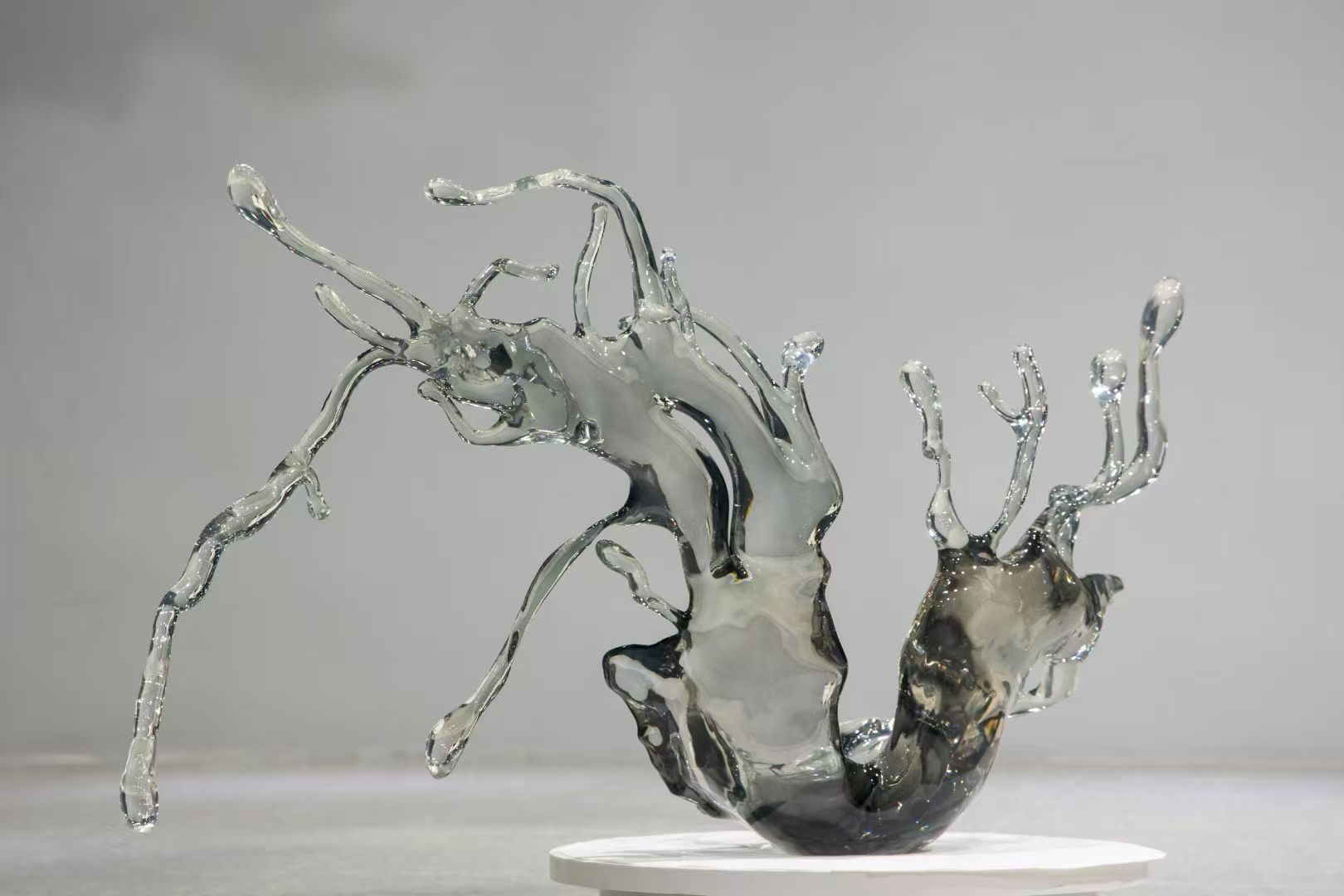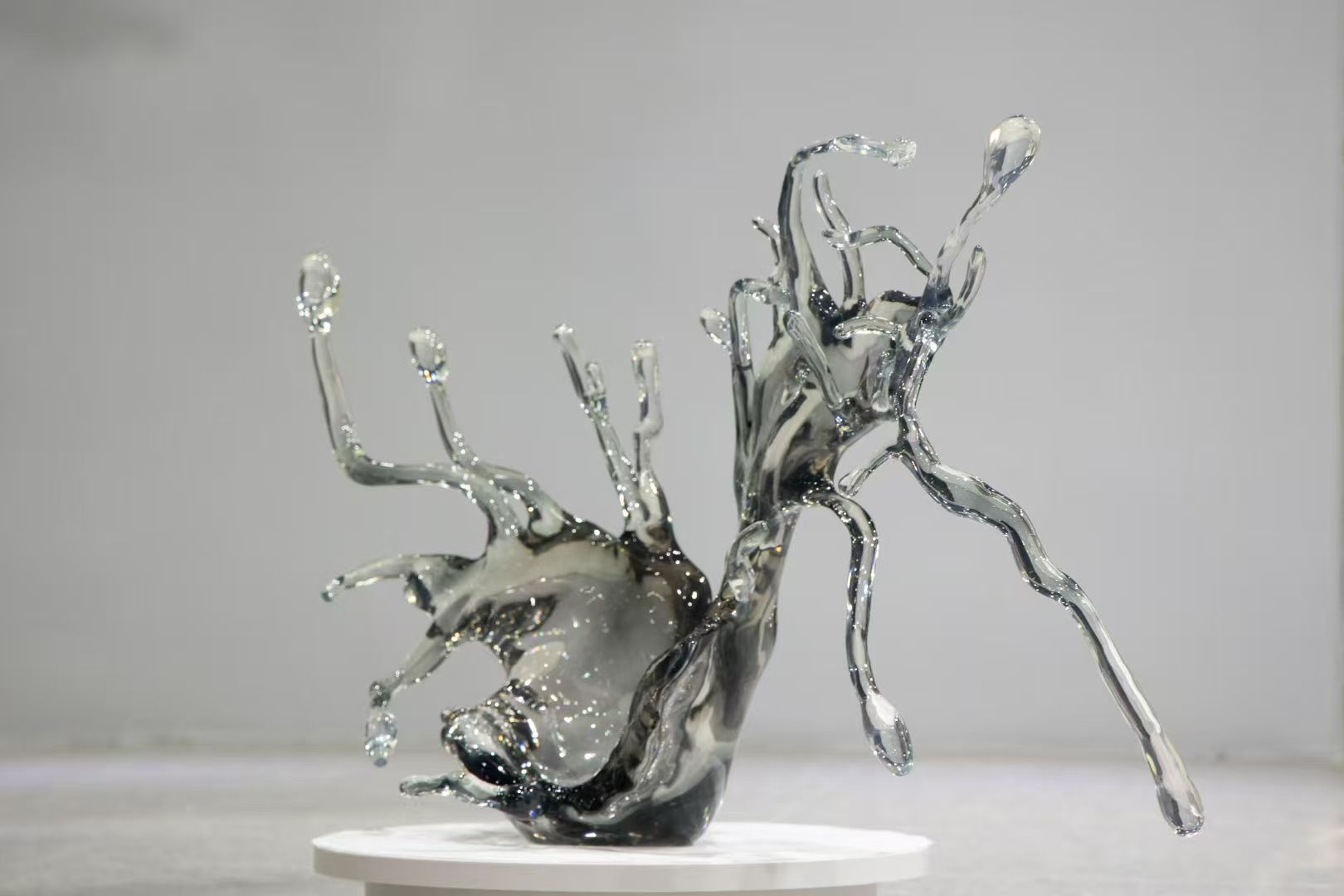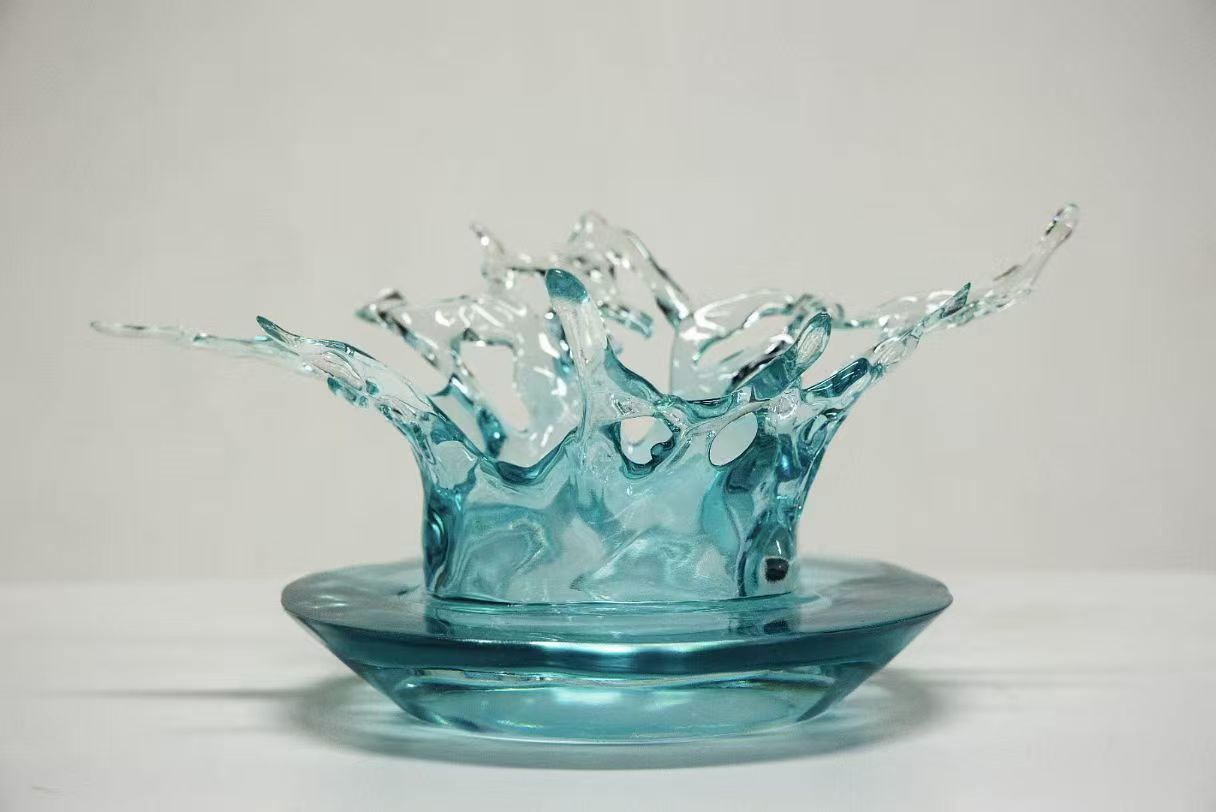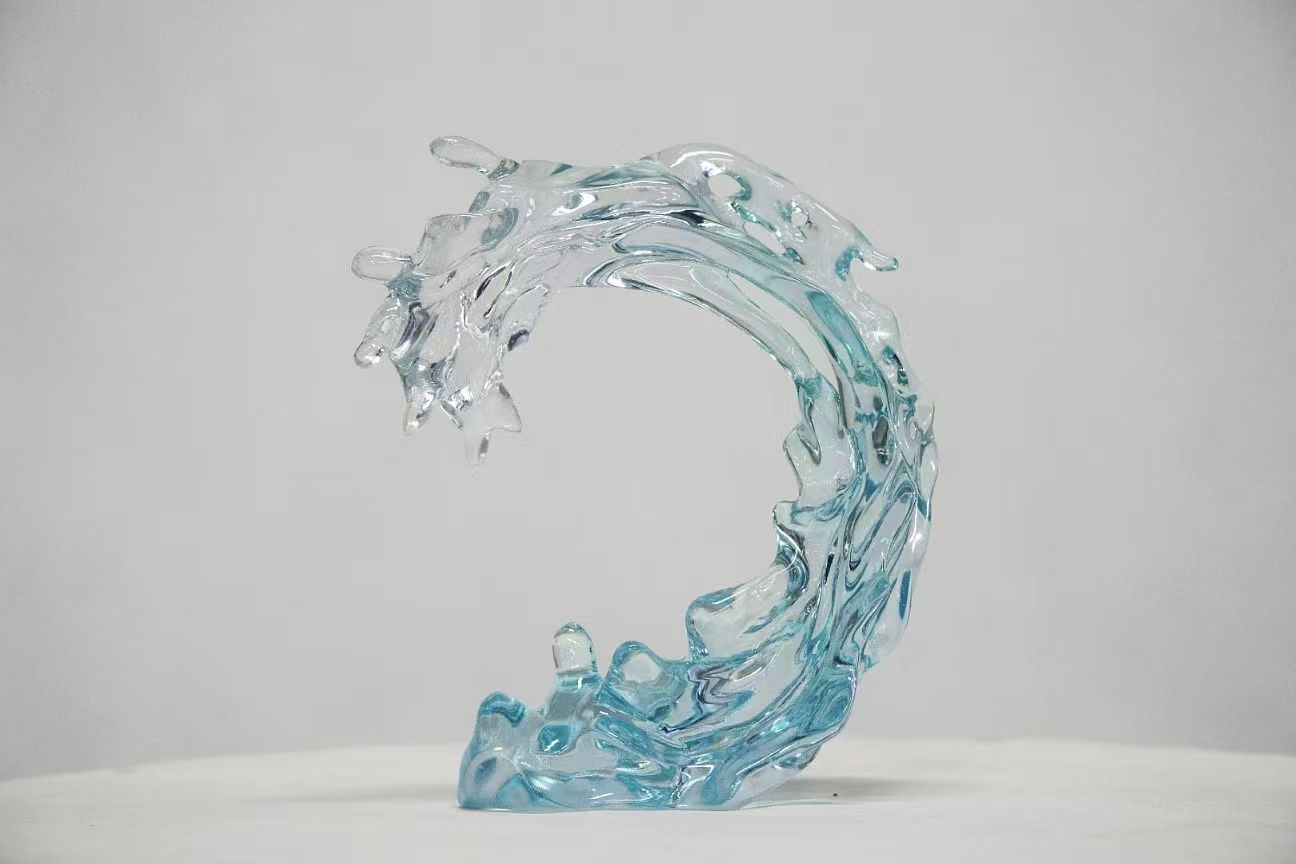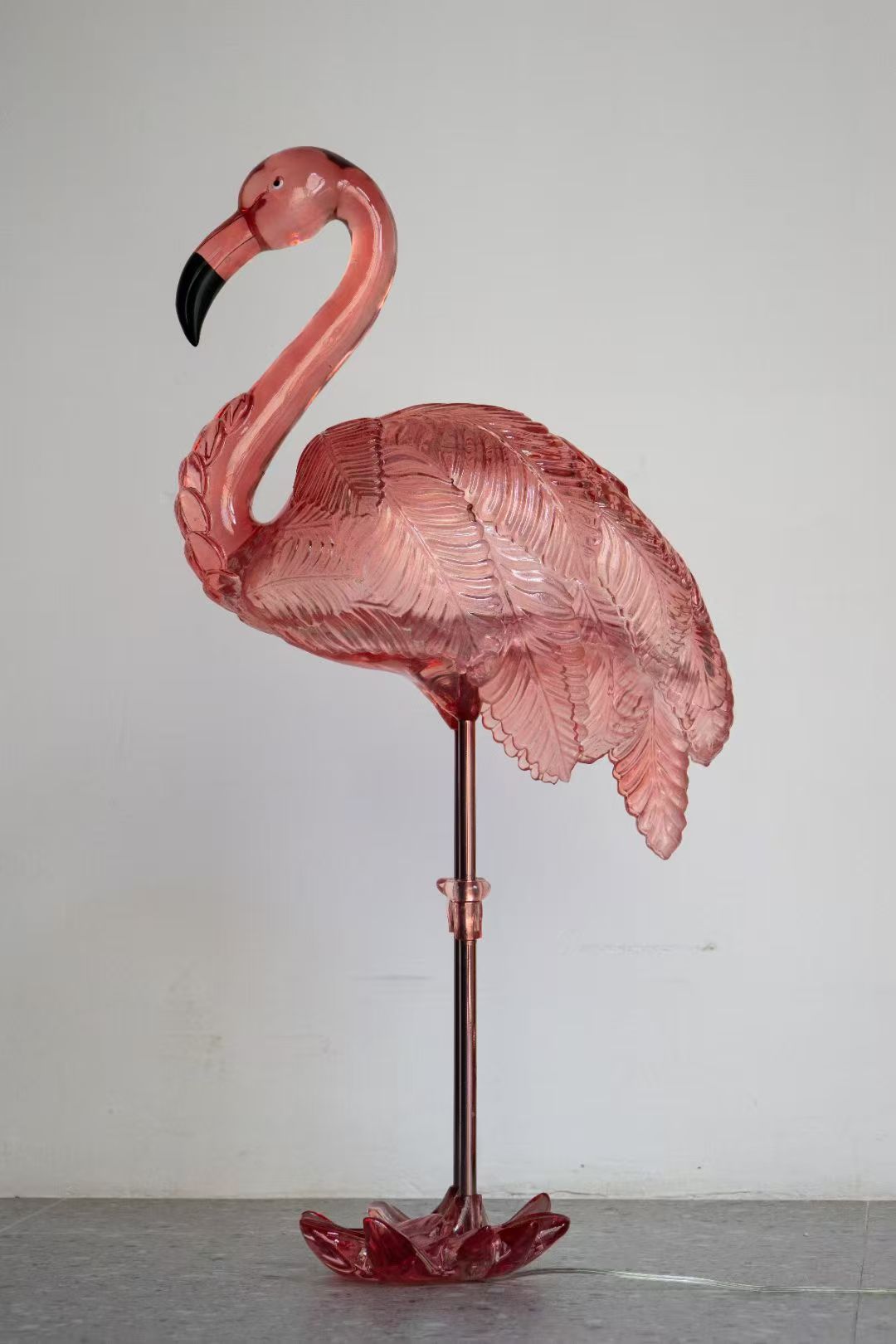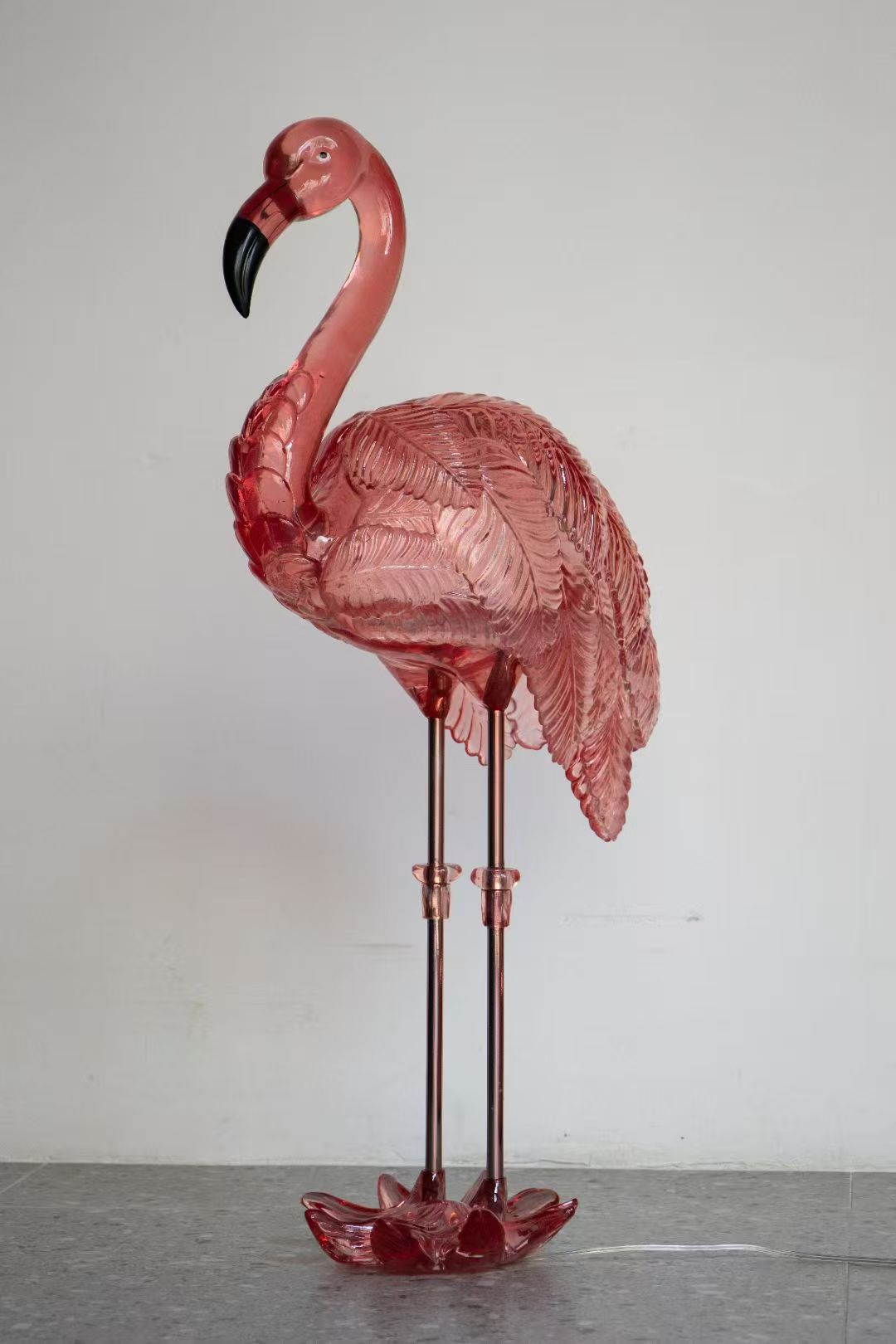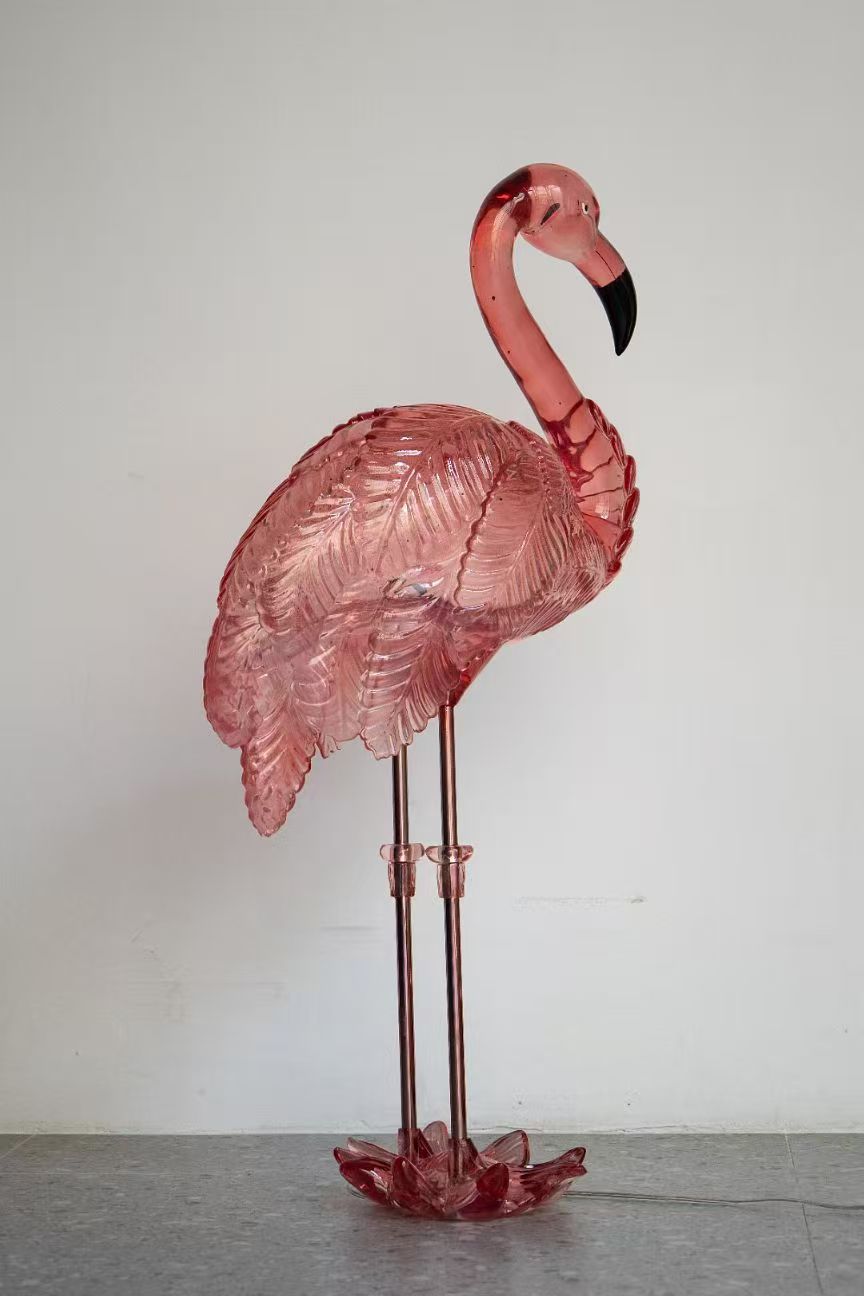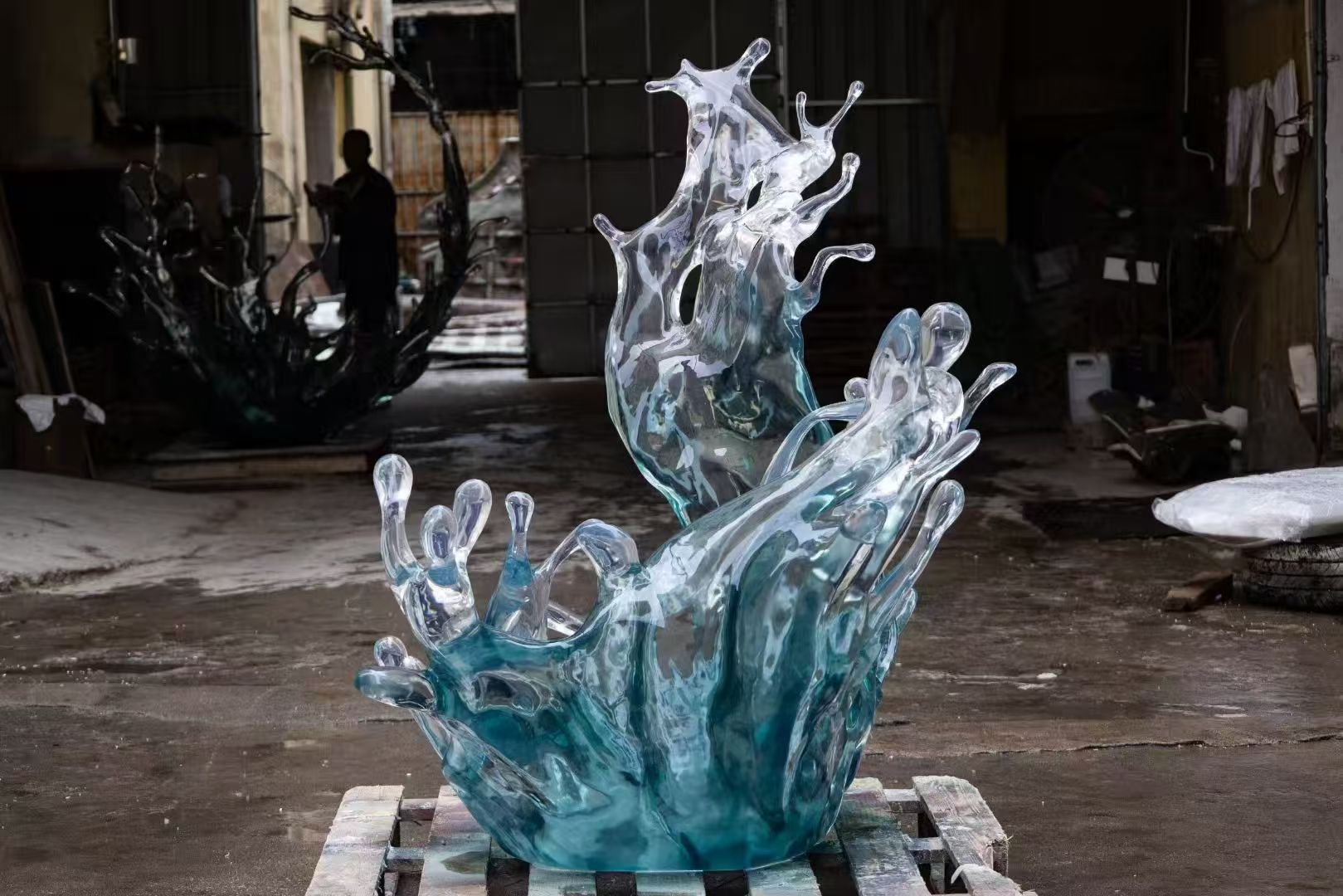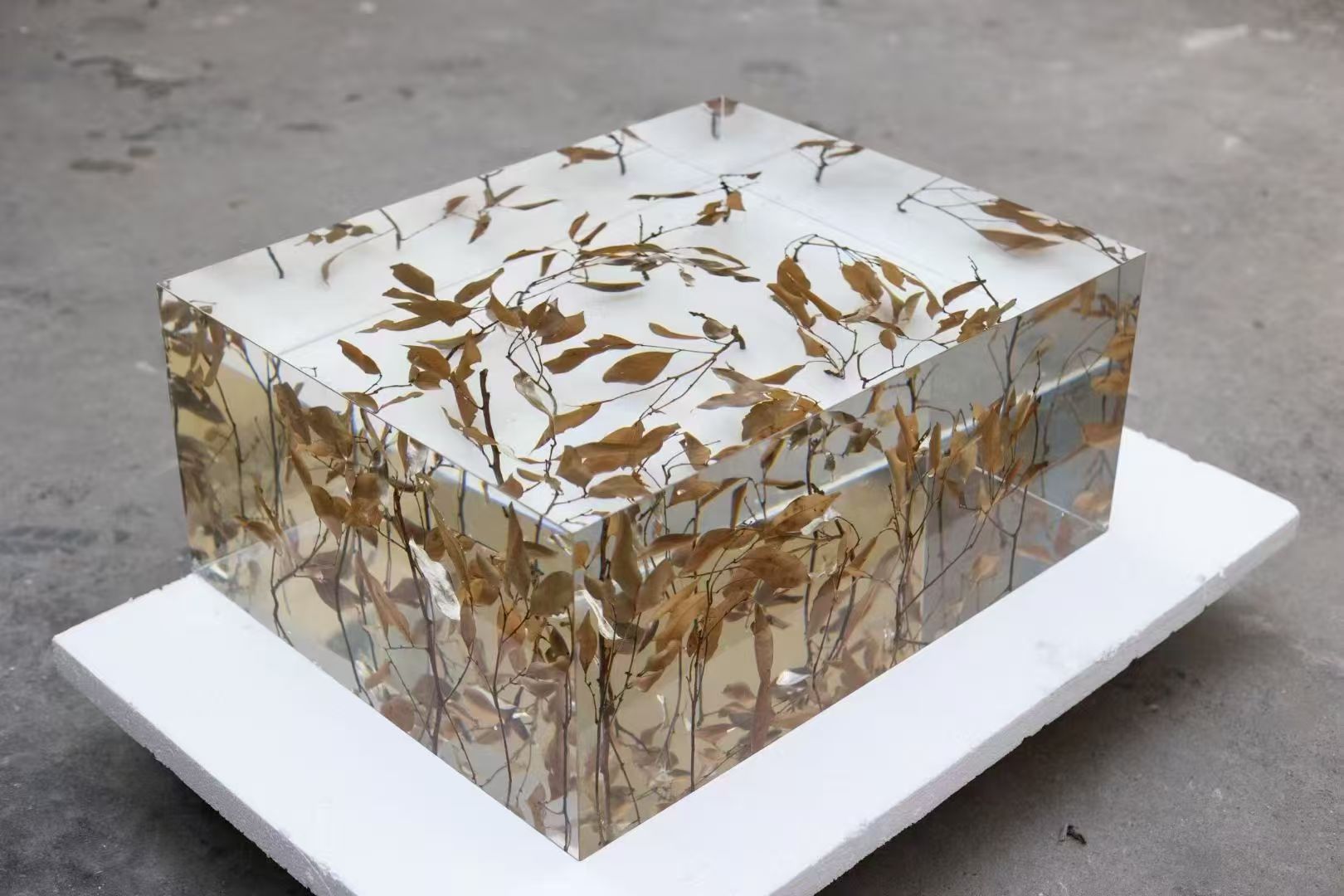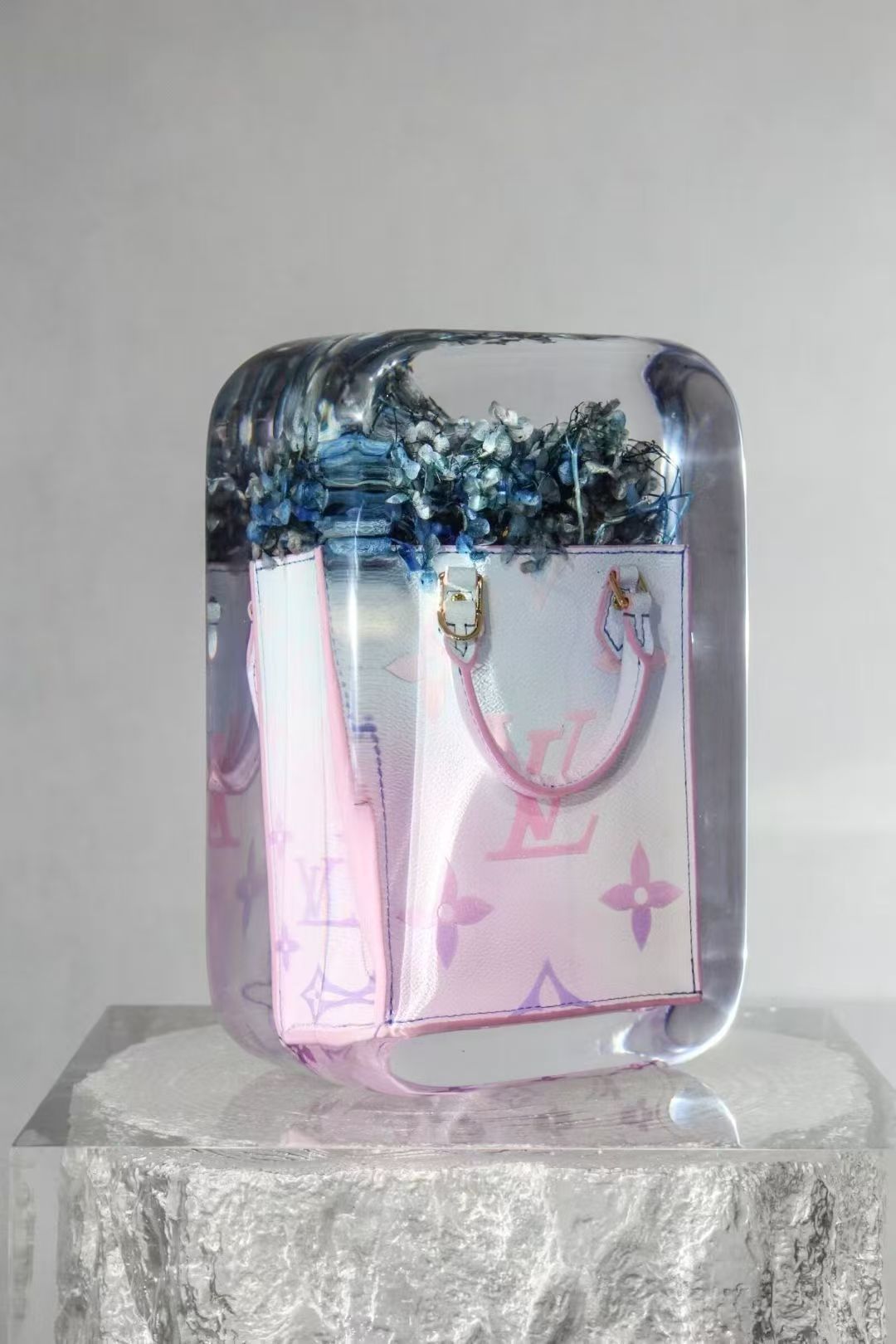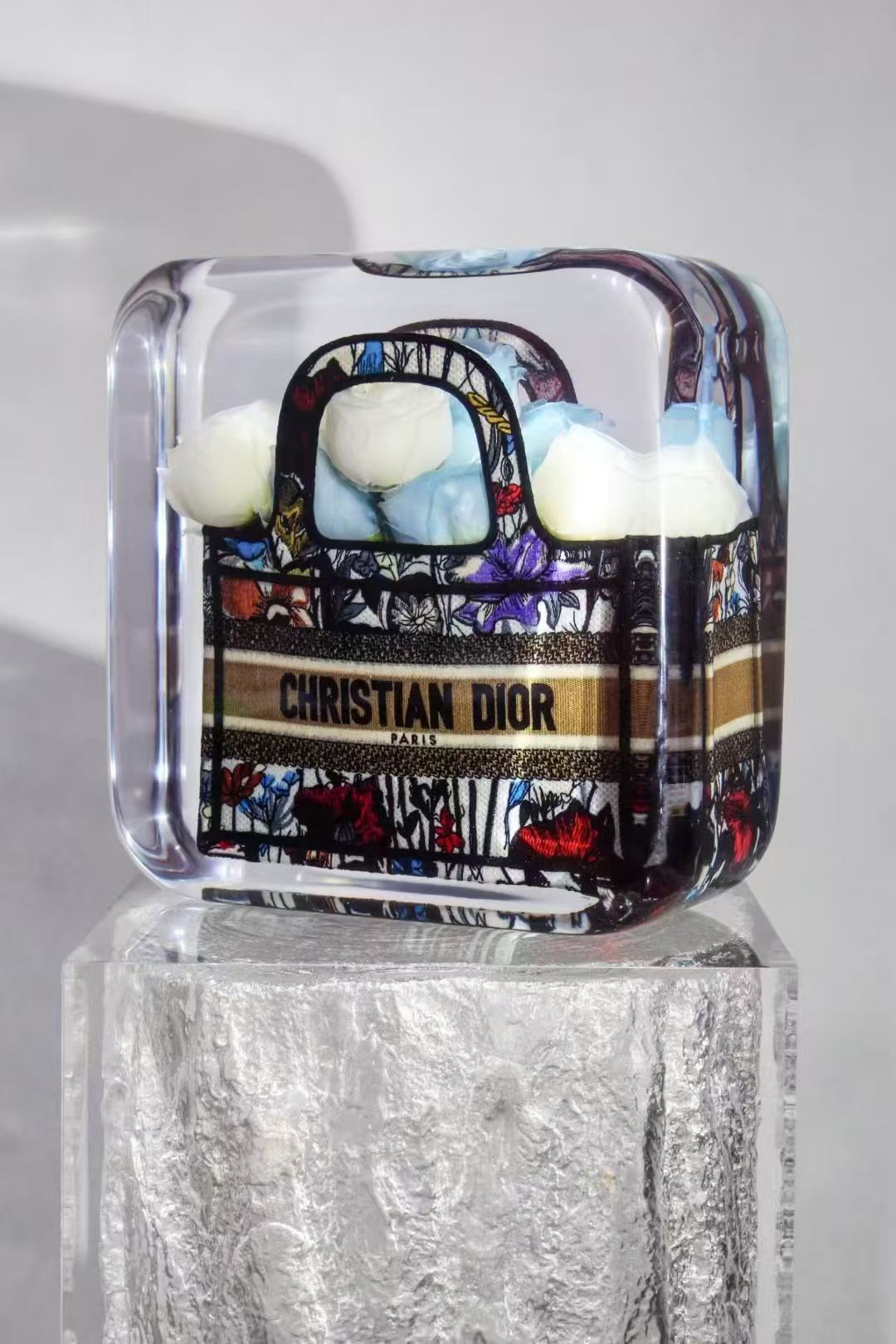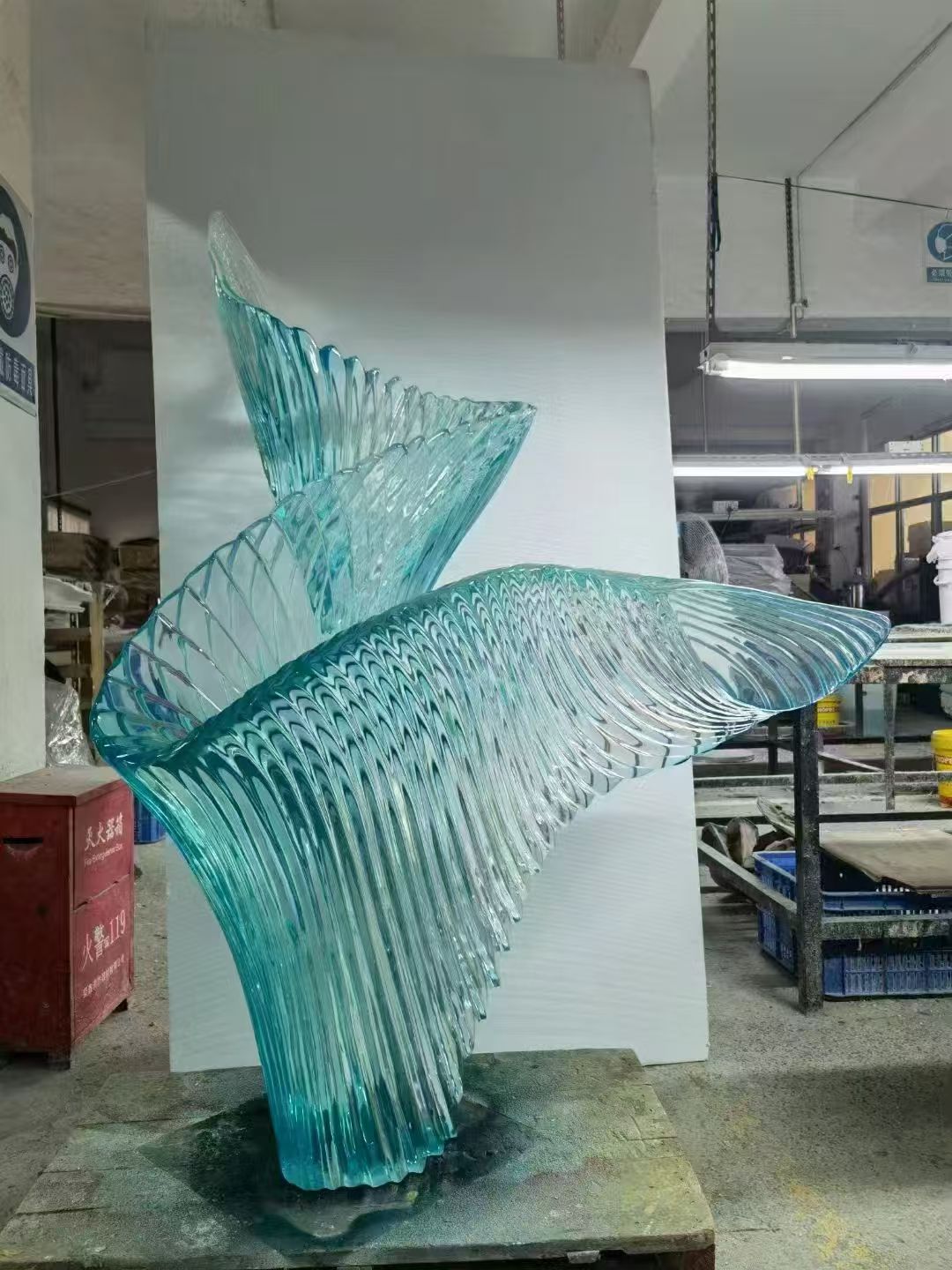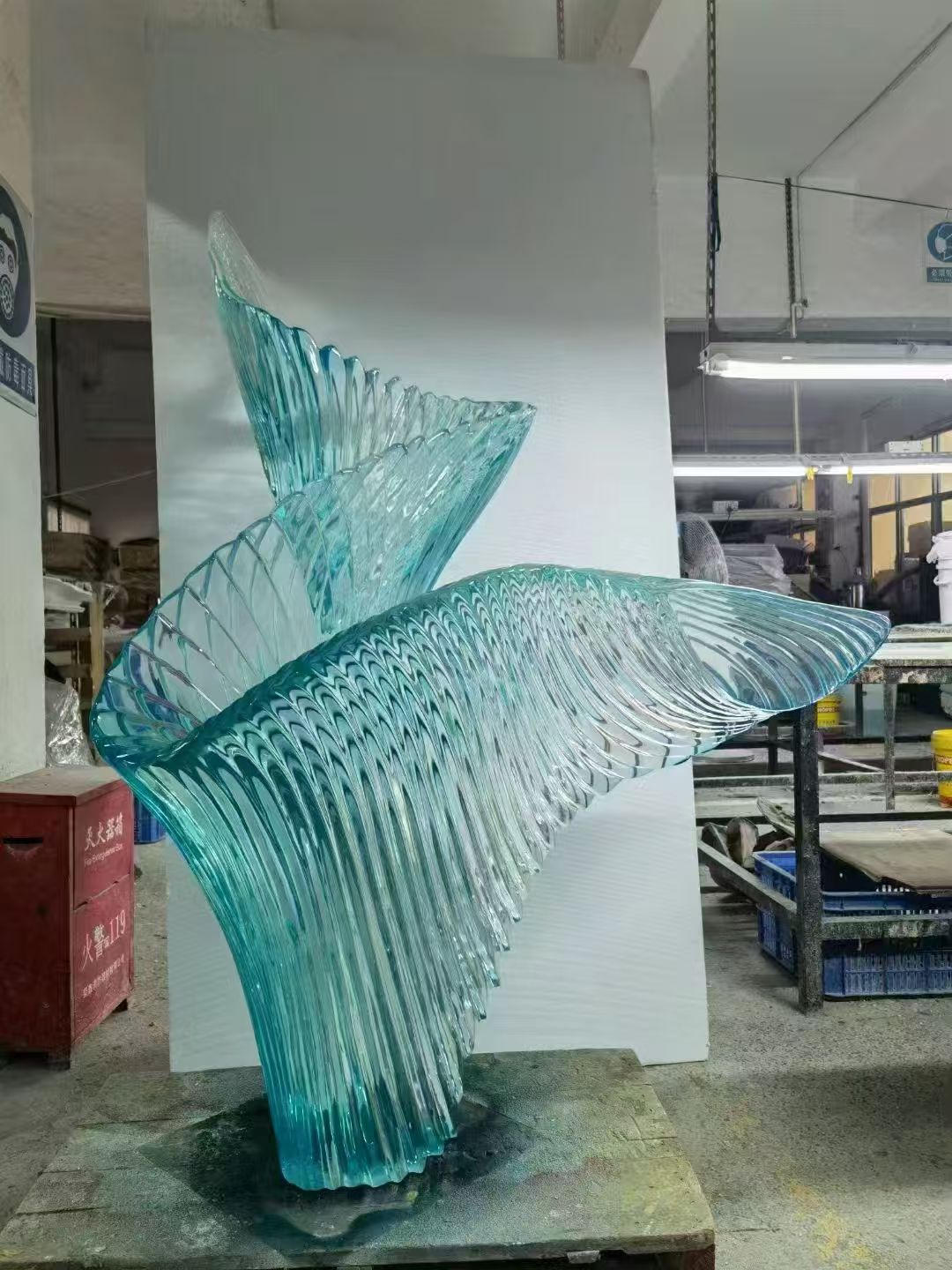
Example Cases from Professional Transparent Resin Sculptures
Made by Sculptureshome
What is Transparent Resin Sculpture?

Key Characteristics
- Exceptional Transparency: Light passes through effortlessly, creating a crystal-clear, luminous effect ideal for simulating water, ice, or gem-like textures.
- Outstanding Moldability: Resin can be poured, cast, or molded into intricate and complex shapes, easily incorporating diverse materials like metals, pigments, dried flowers, or LED lights.
- Versatile Coloring: Transparent dyes and pigments can be added to achieve subtle gradients, vibrant hues, or layered color effects, greatly enhancing artistic expression.
- Diverse Textures: From evident finishes to pearlescent, metallic, frosted, or dichroic variations, the medium supports a wide range of aesthetic outcomes.
- Broad Applications: Widely used for figurines, high-end collectibles (e.g., anime hand-painted figures), decorative objects, architectural models, art installations, and both indoor and outdoor decor.
Common Materials
- Epoxy Resin: The most popular choice for clear resin sculpture due to its superior clarity, hardness, durability, and resistance to yellowing—perfect for professional-grade pieces.
- Acrylic (PMMA/Organic Glass): A thermoplastic known for excellent optical clarity and weather resistance, frequently used in larger sculptures and display models.
- Transparent Resin Clay: A newer, user-friendly material with elasticity, non-stick properties, high transparency, and long-lasting durability, favored for detailed hand-sculpting and hybrid techniques.
By combining these materials and characteristics, transparent resin sculpture bridges traditional craftsmanship with modern innovation, delivering artworks that captivate through their interplay of light, form, and illusion.

The History and Evolution of Transparent Resin Sculpture
Early Exploration (Early to Mid-20th Century)
- Material Origins: In 1907 (patented 1909), Belgian chemist Leo Baekeland invented Bakelite, the first fully synthetic plastic (phenolic resin), primarily used for industrial items like electrical insulators and everyday objects, with limited early sculptural applications due to its opacity.
- Industrial Foundations: The 1930s saw breakthroughs in transparent synthetics. Poly(methyl methacrylate) (PMMA, or acrylic) was commercialized around 1933 by Otto Röhm (Plexiglas® in Germany) and others (Perspex in the UK, Lucite in the US), initially for safety glass and wartime uses like aircraft windows. Epoxy resins were pioneered in the late 1930s by Pierre Castan (Switzerland) and Sylvan Greenlee (US), gaining traction post-WWII for adhesives and coatings.
Rise in Modern Art (Mid-20th Century to 1970s)
- New Materials Emerge: The industrialization of transparent polyester, epoxy, and acrylic resins provided artists with moldable, light-refracting alternatives to glass.
- Abstract and Expressive Experiments: Pioneers like Eva Hesse (1960s) used fiberglass resin for translucent, organic forms in works like Repetition Nineteen. California’s Light and Space movement featured artists such as DeWain Valentine crafting massive, flawless polyester resin slabs that dramatically refracted light. Hyperrealists like Duane Hanson and Niki de Saint Phalle employed polyester resin for lifelike figures and vibrant monumental sculptures (e.g., Saint Phalle’s Nanas).
Technical Maturity and Widespread Adoption (1980s to Present)
- Key Techniques: Advances in casting, vacuum forming, and embedding (incorporating wood, metal, dried flowers, or objects) perfected clarity and durability.
- Diverse Styles: From large-scale installations and public art to intimate desktop pieces, transparent resin evolved into a versatile sculptural language with its signature “ethereal transparency” and “crystal-like” quality.
- Representative Artists: Contemporary figures have pushed boundaries—Dustin Yellin suspends found objects in clear resin layers; others explore embedding and light play. Professional manufacturers like SculpturesHome.com continue this tradition, producing high-precision custom transparent resin sculptures that blend historical techniques with modern innovation for galleries, decor, and installations.
Core Characteristics of the Evolution
- From Solid to Ethereal: Shifting from opaque mass to light-penetrating voids, creating spiritual, illusory effects.
- From Subtractive to Additive: Moving beyond carving (removal) to pouring, layering, and building forms freely.
- From Inherent Color to Rich Layers: Enabling dyes, pigments, and embeds for complex depth and narrative.
How Transparent Resin Sculptures Are Made

-
Material Selection: Clear Resin
- High optical clarity
- Low shrinkage during curing
- Strong UV resistance to reduce yellowing
- Long-term durability and stability
Mold Design and Preparation
- Smooth mold surfaces to ensure transparency
- Precise details for accurate shape reproduction
- Proper mold release treatment to prevent surface defects
Resin Mixing and Degassing
- Mixing is done slowly to avoid air bubbles
- The mixture is often placed in a vacuum chamber to remove trapped air
- Temperature and humidity are strictly controlled
Casting the Transparent Resin
- Casting is done in multiple layers
- Each layer partially cures before the next is added
- Embedded elements (if any) are positioned precisely during this stage
Controlled Curing Process
- Prevents cracking or warping
- Maintains optical clarity
- Ensures structural strength
Demolding and Surface Refinement
- Fine sanding to remove seam lines
- Progressive polishing with specialized compounds
- Achieving a glass-like, high-gloss finish
Final Inspection and Protection
- Transparency and clarity
- Structural integrity
- Surface consistency
Custom Transparent Resin Sculpture Services of Sculptureshome.com
Custom Transparent Resin Sculpture Services of Sculptureshome.com
🔹 What We Offer
- Fully Custom Designs From concept sketches to finished sculptures, every piece is made to your exact specifications.
- Flexible Sizes & Shapes Small decorative items to large-scale installations.
- Material & Finish Options Crystal-clear, translucent, frosted, tinted, or embedded elements.
🔹 Customization Process
🔹 OEM & ODM Capabilities
- Private label production
- Brand-specific designs
- Consistent color and transparency standards
- Scalable production for long-term projects
🔹 Ideal Applications
- Art galleries & exhibitions
- Luxury home décor
- Commercial displays & retail spaces
- Corporate gifts & branded installations
🔹 Why Choose Custom Transparent Resin Sculptures?
FAQ
Will transparent resin sculptures turn yellow over time?
High-quality transparent resin sculptures are made with UV-resistant clear resin, which significantly slows yellowing. Proper indoor placement and avoiding prolonged direct sunlight help maintain long-term clarity.
Are transparent resin sculptures suitable for outdoor use?
They are primarily designed for indoor or semi-outdoor environments. For outdoor projects, special resin formulations and protective coatings are required to improve weather and UV resistance.
How durable are transparent resin sculptures?
Transparent resin is lightweight yet impact-resistant, making it stronger and safer than glass. With proper handling, it maintains structural stability for many years.
Can I customize the size, color, or design?
Yes. Transparent resin sculptures can be fully customized, including size, shape, transparency level, color tint, surface finish (glossy or frosted), and embedded elements.
What is the minimum order quantity (MOQ)?
MOQ depends on the design complexity and production method. Single custom pieces and bulk orders are both supported.
How long does production take?
Production time typically ranges from 2 to 6 weeks, depending on size, complexity, and quantity. Large or highly detailed projects may require additional time.
Is international shipping safe?
Yes. Professional manufacturers use protective, export-grade packaging to prevent scratches, cracks, and surface damage during international transport.
How should transparent resin sculptures be cleaned?
Use a soft microfiber cloth with mild soap and water. Avoid abrasive cleaners or rough materials that could scratch the surface.